
In brief:
- Cotton poplin is woven in a plain weave, the warp and weft threads crossing one by one, which gives a fine, durable fabric that resists wrinkling.
- The typical weight of a shirting poplin falls between 100 and 150 g/m², with a common benchmark around 100 to 125 g/m² for a dress shirt.
- The warp thread is usually finer and more numerous than the weft thread: this deliberate imbalance gives poplin its slight ribbed hand.
- Not all poplin is cotton: wool, silk, rayon and polyester are also woven as poplin, which is why checking the exact composition before buying matters.
What is cotton poplin, and why it shows up on so many shirts
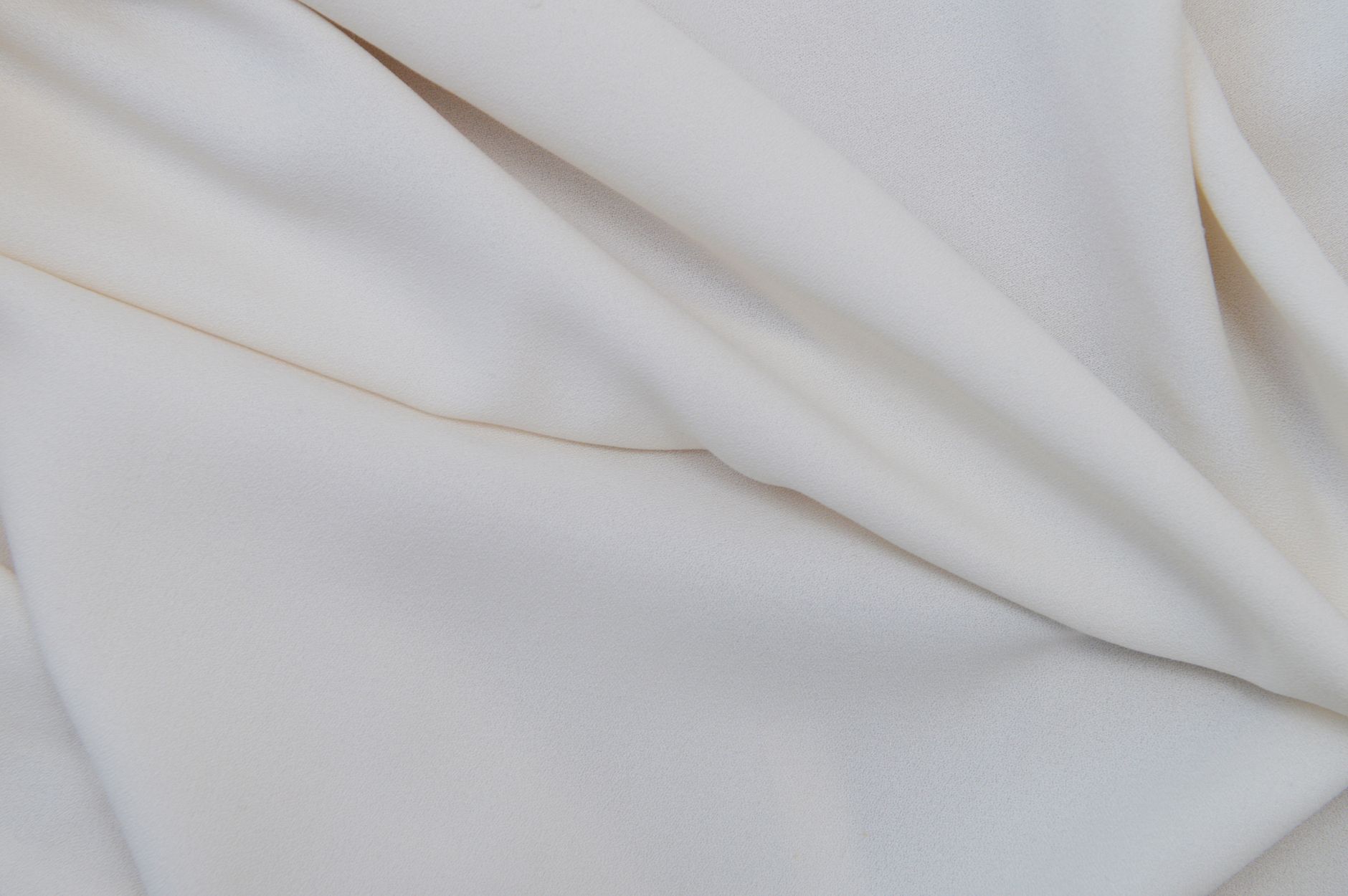
Cotton poplin is one of the most common weaves in the shirt wardrobe, chosen for its clean drape and fine hand. Unlike a twill or a flannel, which stand out visually by their texture, poplin is defined by a tight plain weave: the warp and weft threads cross one by one, with no surface pattern, producing a flat, durable fabric that resists wrinkling.
The table below lays out the main poplin families found on a shirt, with indicative weights common across several ranges on the market.
| Poplin type | Common composition | Indicative weight | Recommended use |
|---|---|---|---|
| Light poplin | Combed cotton, fine yarn | 70 to 100 g/m² | Summer shirt, worn close to the skin |
| Classic poplin | Cotton, medium yarn | 100 to 125 g/m² | Dress shirt, year-round wear |
| Stretch poplin | Cotton and elastane | 120 to 135 g/m² | Fitted shirt, ease of movement |
| Heavy poplin | Plied cotton | 150 g/m² and above | Winter shirt or light jacket |
A plain weave, not a surface pattern
Just as brushing defines flannel, it is the weave that defines poplin: the simplest of textile weaves, made by passing the weft thread alternately over and under each warp thread. This tight weave, with no marked texture, explains why poplin keeps a clean drape even after several hours of wear, an advantage that a looser weave such as cotton gauze does not share.
Warp and weft: what sets a fine poplin apart from a heavy one
Beyond the weight stated on a product page, it is the balance between the two threads of the weave that explains the differences in hand from one poplin to another.
A deliberate imbalance between the two threads
Poplin is recognised by a deliberate imbalance between its two threads: the warp, finer and more numerous per centimetre, and the weft, thicker and more spaced out. This weaving choice gives poplin its slight ribbed hand, felt more than seen, and a strength greater than a fabric whose two threads are of equal thickness.
“Poplin is now made with wool, cotton, silk, rayon, polyester or a mixture of these. Since it has a plain under/over weave, the fabric displays a plain woven surface with no ribbing if the weft and warp threads are of the same material and size. Shirts made from this material are easy to iron and do not wrinkle easily.” Source: Wikipedia, “Poplin” article, 2026
In other words, poplin today is woven in wool, cotton, silk, rayon or polyester, and a shirt made from this fabric irons easily and keeps a crisp look through the day, a practical advantage rather than a marketing claim.
Why cotton remains the reference composition for a shirt
Cotton covers most of the poplin shirt offering, favoured for its breathability and easy care compared with silk or wool. Long-staple cotton, spun finer and more evenly than standard cotton, gives a softer, stronger poplin at an equivalent weight, though this detail is rarely stated outside detailed technical sheets. To verify that a poplin advertised as cotton really is cotton, the label-reading method detailed in the guide on the best men’s 100% cotton shirt applies the same way: only the exact percentage on the product page or the label is reliable, never the word “poplin” on its own.
Poplin, oxford or cotton gauze: recognising a shirt’s weave
Poplin is only one of several possible weaves for a cotton shirt, and confusing it with oxford or cotton gauze often leads to the wrong expectations about the final hand.
A tighter weave than oxford
Oxford is woven with a different structure, with warp threads grouped in pairs that give a more pronounced texture and a thicker-feeling fabric. Poplin, by contrast, stays flat and fine, which makes it better suited to a close fit under a jacket or a sweater, where oxford keeps a more casual look. The detailed comparison of shirt weaves, pinpoint, poplin, oxford and twill, is covered in the white shirt for men guide, which carries over to a coloured or patterned poplin.
Denser than cotton gauze
Cotton gauze, by contrast, uses a loose, airy weave designed for lightness and airflow, while poplin favours density and drape. Both are cotton, but they answer opposite needs: gauze for humid heat, poplin for a dressier, year-round look.
When to wear a cotton poplin shirt: from the office to evening wear
Cotton poplin owes its popularity to its versatility: its fine weave and clean drape let it move from a professional setting to a dressier occasion without a change in style.
The default choice for a formal office
For a formal office, poplin remains the reference weave: its flat surface slides easily under a suit jacket, and its resistance to wrinkling limits touch-ups through the day. A stretch version, adding a small proportion of elastane to the cotton, brings extra ease of movement without sacrificing that clean drape.
A fabric suited to dressier occasions too
The same clean drape that works for the office also works for an evening or formal shirt: poplin, worn in white or a solid colour, keeps a sober, smooth look under careful lighting, where a more textured weave would draw more attention. It stands apart in this way from a casual fabric like flannel, which stays in a more relaxed register.
Cotton poplin or linen: which to choose by season
The choice between poplin and linen depends mainly on the season and the feel wanted against the skin, far more than on any quality gap between the two fabrics.
Poplin year-round, linen for dry heat
Cotton poplin, denser and more structured, suits year-round wear, including in a temperate climate, while linen is better reserved for high heat thanks to its superior breathability, at the cost of more visible creasing through the day. The full trade-off between these two fabrics, including how they behave with care, is detailed in the comparison between linen or cotton shirt.
Poplin versus flannel: the winter opposite
At the other end of the seasonal spectrum, the flannel shirt sits in a warm, textured register that poplin isn’t trying to compete with: poplin remains the everyday, office fabric, flannel the one for autumn and winter in a casual register.
Caring for cotton poplin: washing and ironing without damage
The main care advantage of cotton poplin remains its low tendency to wrinkle, provided a few simple washing rules are followed.
A fabric that irons easily
Thanks to its tight plain weave, cotton poplin keeps a smooth surface after a standard machine wash and needs less ironing time than a looser-woven fabric. Washing at 30 or 40°C, depending on colour, and air drying rather than tumble drying reduces the risk of shrinking and keeps the fabric supple over time.
The same guidelines as cotton in general
The temperature and ironing guidelines suited to cotton in general, including stains and storage, are detailed in the cotton shirt care guide, directly applicable to a pure cotton poplin or a cotton-elastane blend.
Frequently asked questions
What is the difference between poplin and cotton?
Poplin is not a fibre but a weave, the plain weave, which can be applied to cotton, wool, silk or polyester. Cotton is therefore only one of the possible compositions of a poplin, even though it remains the most common one on a shirt. The confusion comes from the fact that most poplins sold for clothing today are cotton or a cotton-dominant blend. Checking the composition label remains the only way to know whether a given poplin is pure cotton or a blend.
What weight should you choose for cotton poplin?
The weight of a shirting poplin most often falls between 100 and 150 g/m², with a light poplin starting around 70 to 80 g/m² for summer wear. A dress shirt worn year-round usually sits between 100 and 125 g/m², a range that ensures a clean drape without excess thickness. Above 150 g/m², poplin becomes better suited to winter wear or a light jacket than to a classic office shirt. The weight stated on the product page remains more reliable than judging by touch in a store.
How do you recognise good-quality cotton poplin?
Good-quality cotton poplin states a precise composition, the exact percentage of cotton, rather than just the word “poplin”, and a numeric weight rather than an adjective like “heavy” or “premium”. Touch also gives a clue: a slightly ribbed, even hand signals a tight weave, while fabric that creases instantly when pinched often lacks thread density. The length of the cotton fibres used, long-staple or standard cotton, also affects softness and durability, though it is rarely stated outside detailed technical sheets.
When should you wear a cotton poplin shirt?
Cotton poplin can be worn year-round and suits both a professional setting and a dressier occasion, thanks to its clean drape and fine hand. It remains one of the default choices for a formal office, ahead of flannel, which is reserved for colder seasons. In a stretch version, it also adapts to a more fitted shirt without losing its resistance to wrinkling. Only a very heavy poplin, 150 g/m² and above, moves out of the dressy register and closer to a winter fabric.